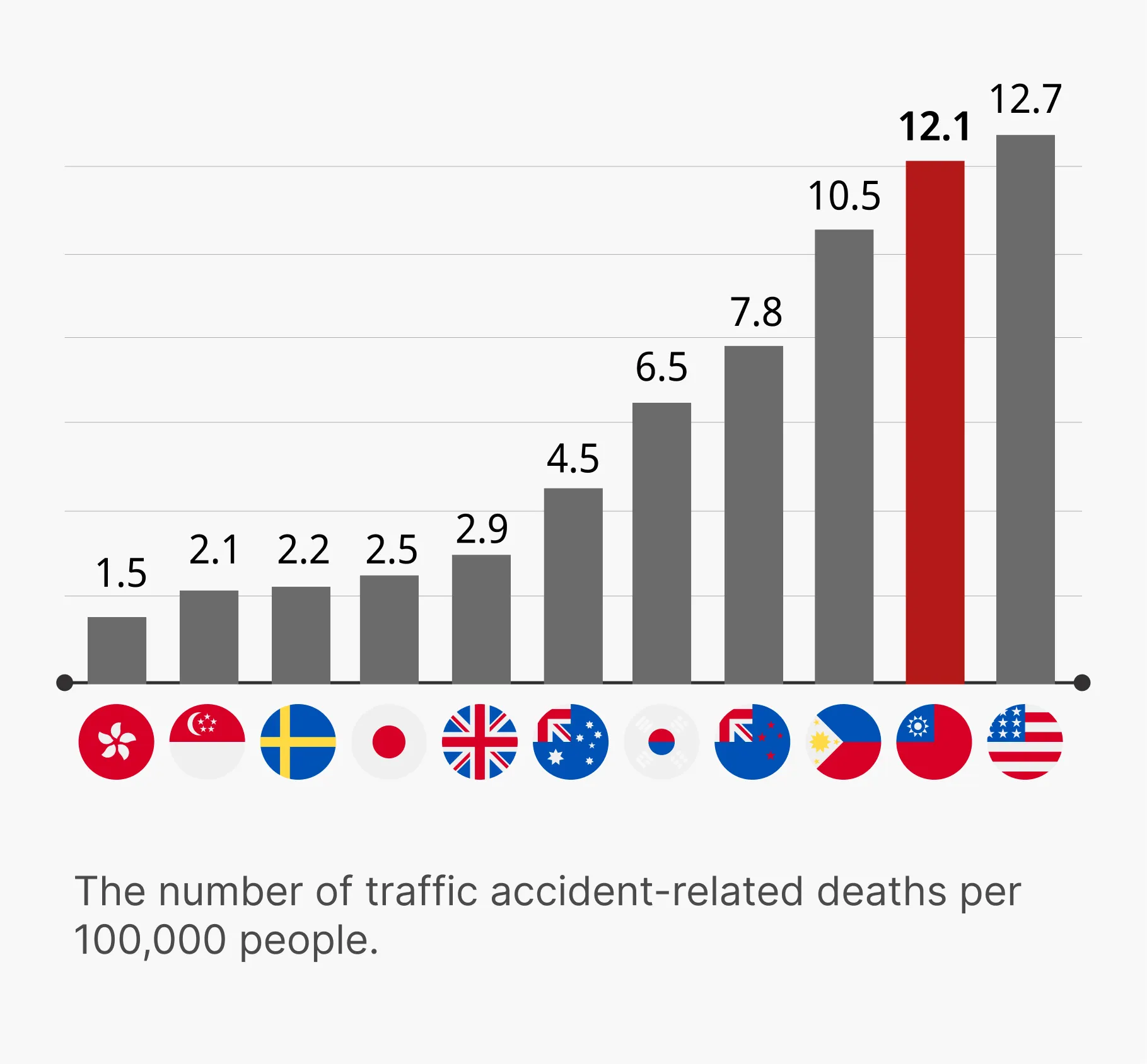
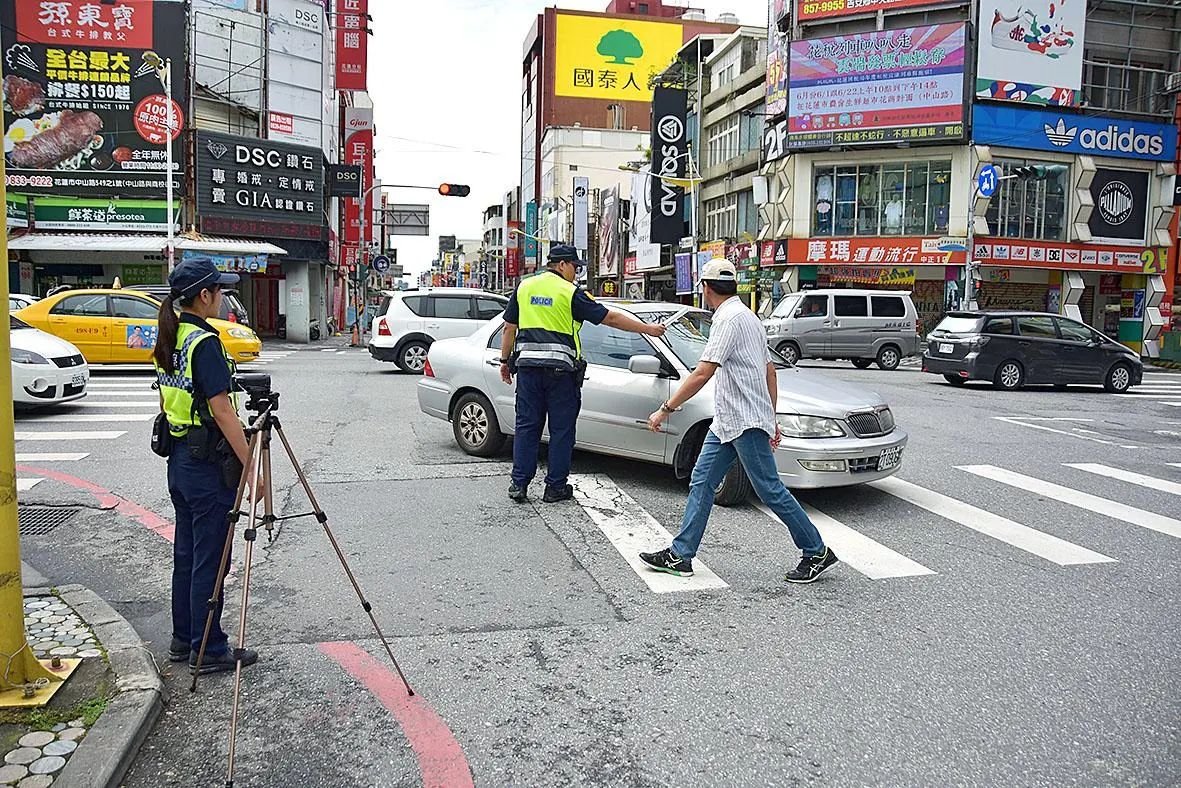
Taiwan is famous for its food, scenery, and hospitality, but it’s also a “living hell for pedestrians.” That’s according to a CNN report last year. Cars not yielding to pedestrians is a daily sight in Taiwan. Some accidents cause only minor scrapes, while others sadly cost lives. there was a tragic incident in Taichung last week where a mother and her child were hit and killed by a bus while obeying traffic signals to cross the road, highlighting the serious issue with Taiwan’s transportation system. Indeed, Taiwan’s roads can be described as chaotic, and its traffic accident rate ranks among the highest globally, surpassing neighboring countries like Japan, South Korea, and Singapore by 2 to 6 times.
So, Taiwan truly is a hell for pedestrians for abroad travelers.
on the other hand, what are the citizens of Taiwan’s opinions on Taiwan’s transportation system?
So, I followed the research I conducted on transportation systems and reached viable conventions to address them- by investigating the existing system, The officials of the transport bureau, and citizens’ opinions on transportation knowledge of Taiwanese citizens.
I started the research by understanding the current system and mapping out all the touchpoints and actors involved. By digging deeper and defining the different exchanges and their points of contact, I wanted to explore the potential alternatives and educate the driving culture knowledge.
“But from amending laws and overall road designs to the citizens’ knowledge of courtesy, that’s the key.” — The Academic from Tamkang University
From the information I had already gathered, there was a common theme that prevailed- addressing Taiwan’s transportation issues requires considering multiple aspects, from legislative amendments and road design to public awareness and the practice of traffic courtesy, each aspect is crucial. To make sure of this point, I adopted two different approaches- interviewing different people (actors I’d already mapped out) and analyzing the different ways of effective road design and enhancing citizens.
I interviewed officials of the Transport Bureau. I asked about their daily life behaviors and their views on Taiwan’s transport policy, as well as showed them the data on transport problems in Taiwan, and then asked them about their feeling.
The officials said everyone must adopt the concept of yielding to pedestrians because pedestrians are the more vulnerable people using the road. If everyone yields, we may see a reduction in deaths at intersections. a few of the citizens said “As a driver, I get pissed off at people who stand around chatting on their phones and then suddenly start to cross when there are only 3 seconds left on the crosswalk signal. Most of the time, they don’t even walk quickly. They walk slow as hell wasting 20 seconds of everyone’s driving time.”
So how to solve those problems? and what way could change citizens’ ideas? The following are some of the insights that I have studied in our research.
“We need to prioritize infrastructure and education first, and If all you do is punish people, the roads will be turned into a prison or execution grounds with drivers still unclear what exactly they did wrong. — Liu Kuan-chieh from Road safety advocate

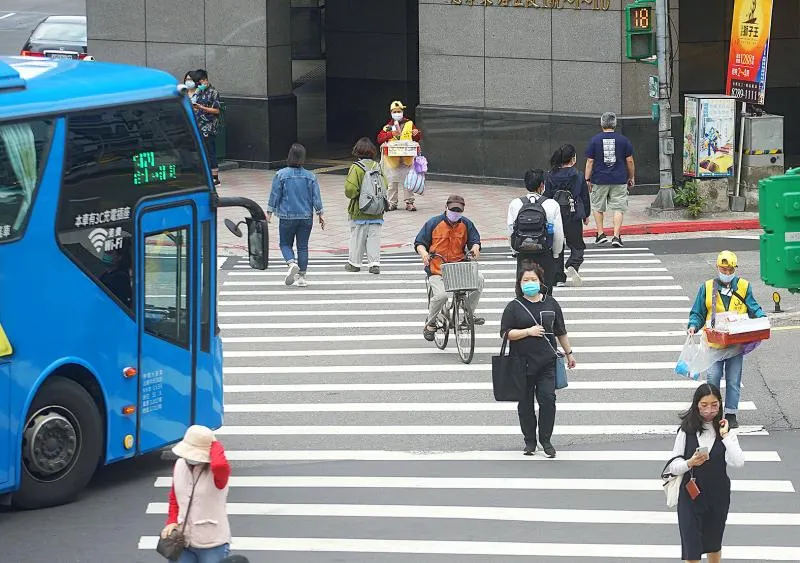
DRIVERS RULE
For the past year, some people have been posting examples of pedestrian-centric urban planning in other countries while criticizing the situation in Taiwan. While most of the comments are supportive, with followers submitting their own experiences and videos of dangerous traffic encounters, there has also been criticism and attacks from car-centric proponents.
Indeed, some do think that this is just how Taiwan is, and those who don’t like it can leave, as evidenced by the comments directed toward Kaohsiung-based Polish reporter Tomasz Sniedziewski when he posted on Twitter earlier this year about scooters not only driving on the sidewalk but honking at people to get out of the way.
As of June, the transportation ministry says there were more than 8 million registered automobiles and 14 million scooters in Taiwan. The scooter numbers have actually dropped over the past decade, while car ownership is growing.
one of the rare pedestrian oases in Taipei — Ximending
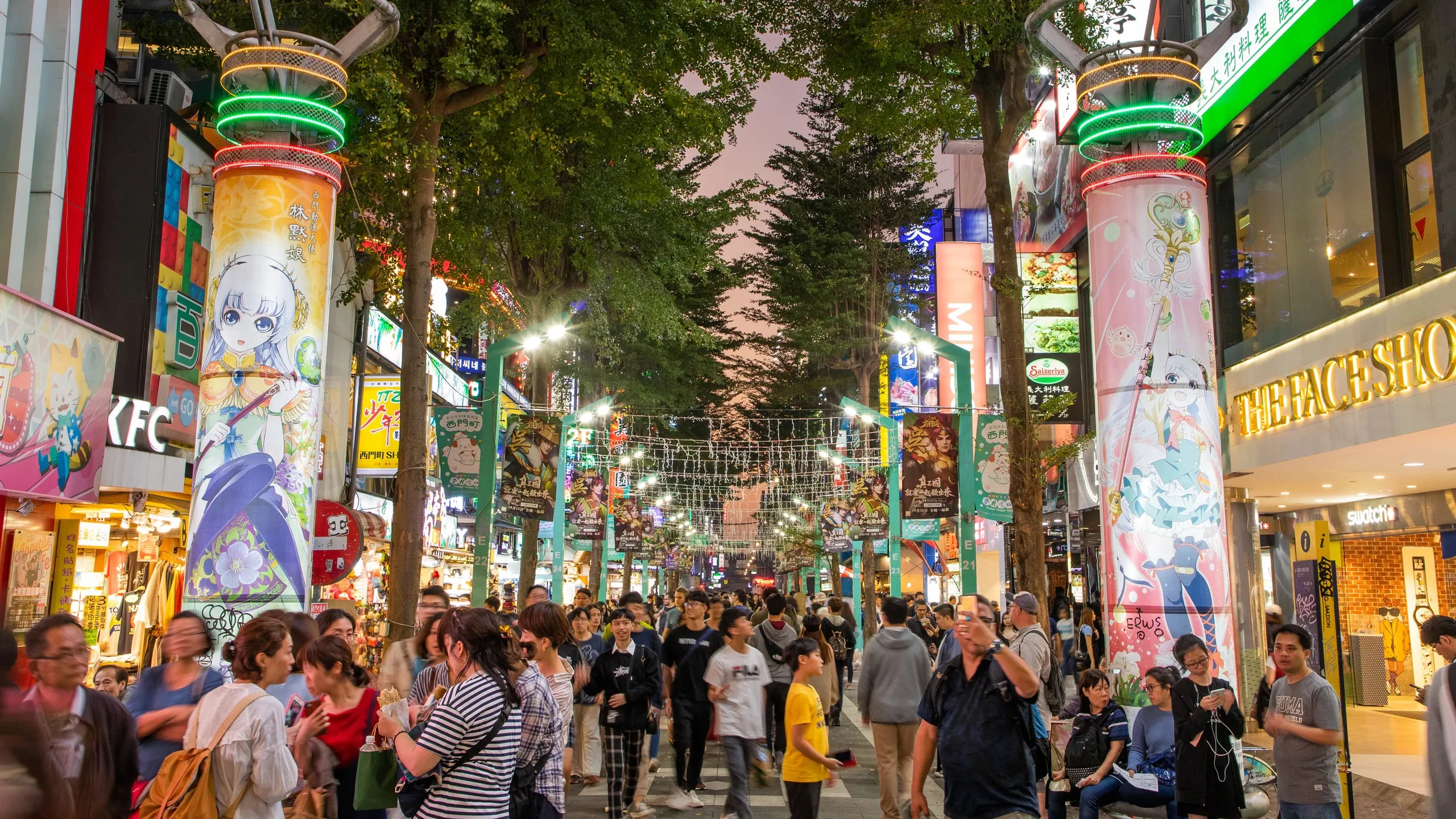
Ximending is designed to be pedestrian-friendly, with many pedestrian streets, spacious sidewalks, beautiful scenery, and a wealth of commercial activities. In Ximending, people can enjoy shopping, taste delicious food, and appreciate art and cultural performances, without worrying about the disruption of car traffic. This pedestrian-friendly design helps improve the quality of urban life while also reducing the risk of traffic accidents.
Today, Ximending is a place filled with various businesses and shops beloved by people from all walks of life. This includes theaters, department stores, markets, hotels, gyms, bars, tea houses, high-end restaurants, tattoo shops, and more. From children to the elderly, from the poor to the wealthy, from locals to foreigners, everyone can find a place to belong in Ximending.

SPEAK OUT

Finally, Taiwan needs more pedestrians to stand up for their rights. people should feel comfortable reporting repeated sidewalk violations and perilous conditions to their neighborhood officials and representatives.
“Sometimes people feel uncomfortable fighting for their rights, but we need to be brave. We are a developed country and these are rights that we deserve,”
It will take much louder voices and actions for there to be meaningful change.
“Stop yielding to vehicles when crossing the road. Stop worrying that [pedestrians] might affect traffic flow. Be ready to call the cops and stand your ground… Only when the majority of pedestrians do this will drivers finally realize how dangerous their accustomed behavior is.”
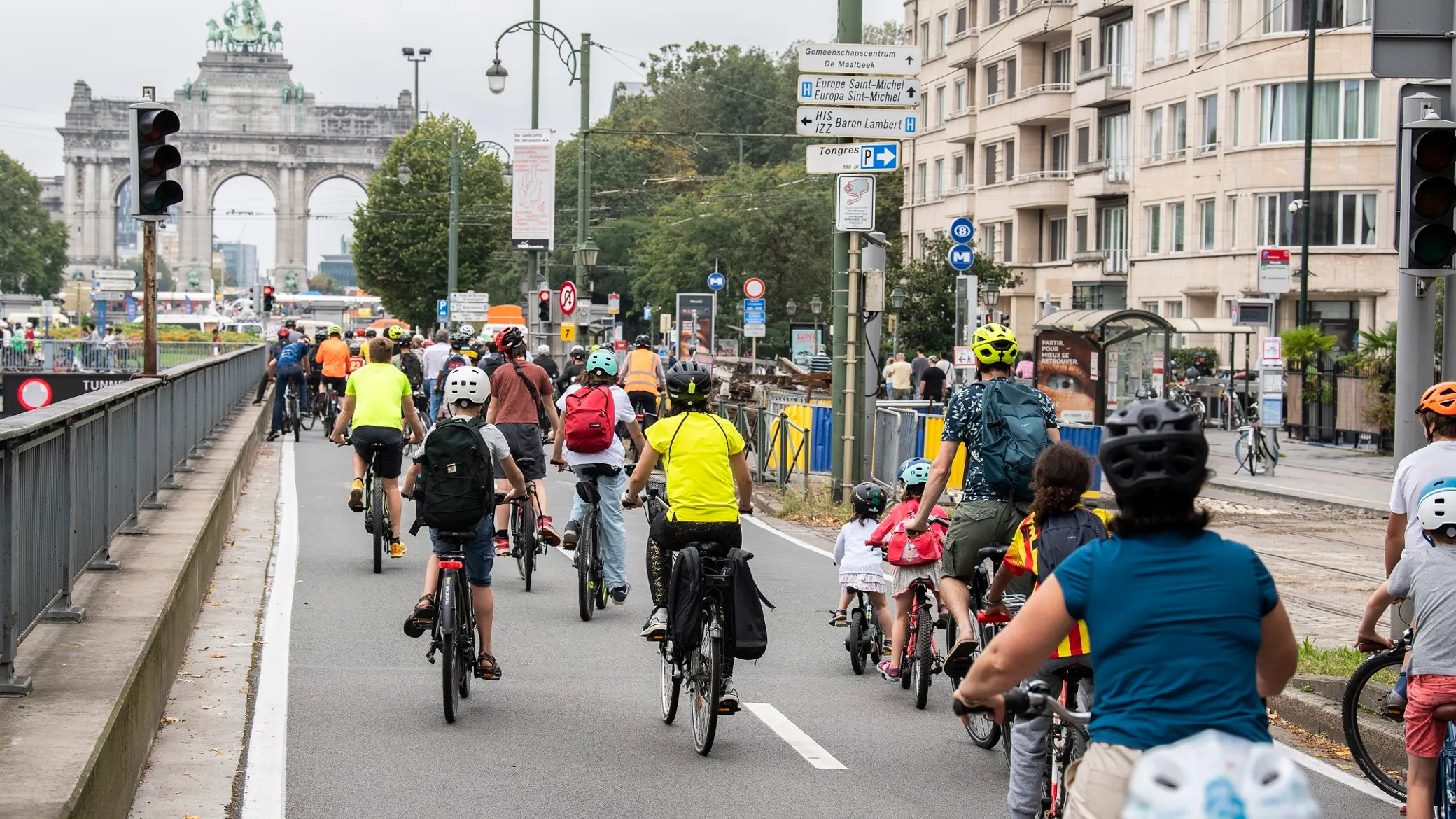
With much of the world adopting a people-oriented traffic model, Taiwan must implement changes to keep pace. Safe roads and intersections are in everyone’s interest. If Taiwan resolves to improve traffic safety, it will shed its image as a “pedestrian hell,” and the country will be a better place for generations to come.